

Vancouver, B.C. – Brasnova Energy Materials Inc. (“BEM” or the “Company”) is pleased to provide an update on the ongoing exploration program at the Capela Gold Project in Pintadas, Bahia, Brazil.
The current program builds on the encouraging rock chip results announced on July 14, 2026, including a peak assay of 4.13 g/t Au, and is focused on advancing the geological interpretation of the Capela Target, better defining the geometry and lateral extent of the mineralized system, and evaluating additional prospective occurrences identified beyond the original target area.
Detailed geological mapping, follow-up rock sampling, active stream sediment sampling and systematic soil sampling are being integrated to support the next stages of exploration. To date, five analytical batches totaling 110 samples have been submitted to SGS Geosol, comprising 52 rock samples, 14 active stream sediment samples and 44 soil samples, including quality assurance and quality control materials. An additional soil-sampling batch is in progress.
HIGHLIGHTS
- Detailed geological mapping has continued within and beyond the original Capela Target.
- Five analytical batches totaling 110 rock, active stream sediment and soil samples have been submitted to SGS Geosol, including QA/QC materials.
- Follow-up rock sampling has targeted the interpreted extension of the known mineralized system and additional hydrothermally altered quartz-vein occurrences outside the original target area.
- Systematic soil sampling is being conducted along lines spaced 100 metres apart, with sample stations at 25-metre intervals, to assist in defining the extent of the mineralized metagranodiorite body.
- Mapping continues to document potassic alteration, silicification, stockwork quartz veinlets, sulphidation and gossan development within the structurally prepared host rocks.
- Additional quartz-vein occurrences north and southwest of the Capela Target display hematite, oxidation and boxwork-like textures. Copper sulphide, visually interpreted in the field as bornite, was also observed at one of the southwest occurrences.
- Assay results from the follow-up sampling are pending and will be reported following receipt, compilation and completion of the Company’s QA/QC review.
EXPLORATION PROGRESS
The exploration program is designed to advance the Capela Project from the initial confirmation of surface gold mineralization toward a more systematic evaluation of the mineralized system.
The work completed to date indicates that gold mineralization at the Capela Target is hosted within intrusive metagranodioritic rocks emplaced along a ductile-brittle shear zone. These rocks are foliated, fractured and affected by hydrothermal alteration, including potassic alteration and silicification, together with stockwork-style quartz veinlets, disseminated sulphides and oxidation zones.
Previous analytical results confirmed gold mineralization in the metagranodiorite, with 22 of 23 rock chip samples returning gold values of 0.241 g/t Au or greater and a peak value of 4.13 g/t Au. Other significant results included 1.734 g/t Au, 1.435 g/t Au and 1.170 g/t Au.
The current follow-up program expands the geological and geochemical coverage around these previously reported occurrences. Rock samples have been collected from the interpreted continuation of the mineralized host rocks and from newly identified quartz-vein occurrences beyond the initial Capela Target (Figure 1).
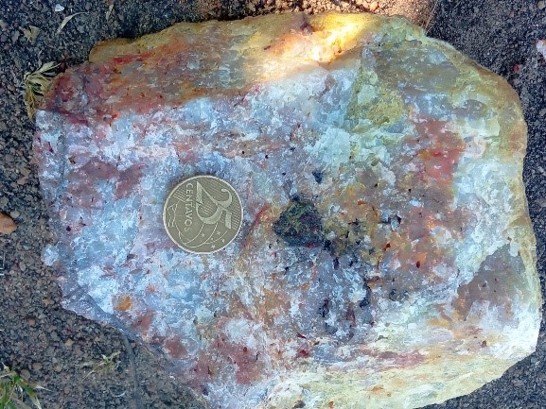
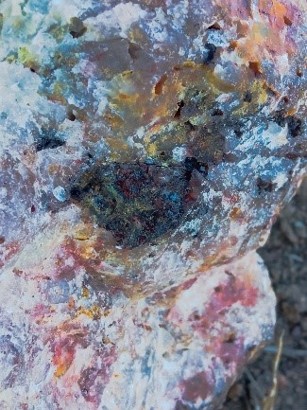
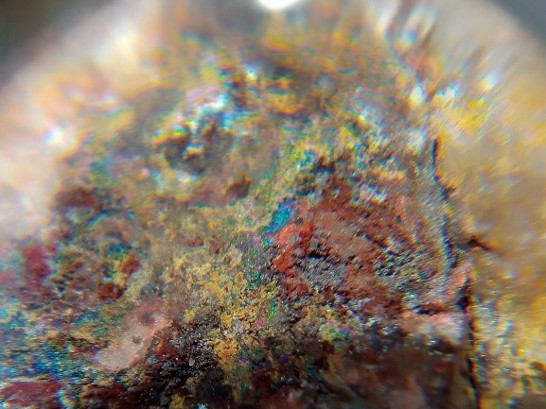
Figure 1: Oxidized quartz-vein material from prospect MJ-144, southwest of the Capela Target, showing hematite, boxwork-like textures and copper sulphide visually interpreted in the field as bornite.
ADDITIONAL PROSPECTIVE OCCURRENCES
Continued mapping has identified additional quartz-vein occurrences north and southwest of the main Capela Target. These occurrences include oxidized quartz veins containing hematite and cavities or moulds interpreted as possible boxwork textures resulting from the weathering and dissolution of sulphide minerals.
At prospect MJ-144, southwest of the Capela Target, the technical team also visually identified copper sulphide mineralization within oxidized quartz-vein material. These observations indicate that hydrothermal activity may extend beyond the currently defined target and provide additional areas for systematic follow-up (Figure 2).
These field observations are preliminary in nature. Samples from the additional occurrences have been included in the follow-up analytical program, and laboratory results will be required to determine their geochemical significance and potential relationship to the known gold-bearing system.
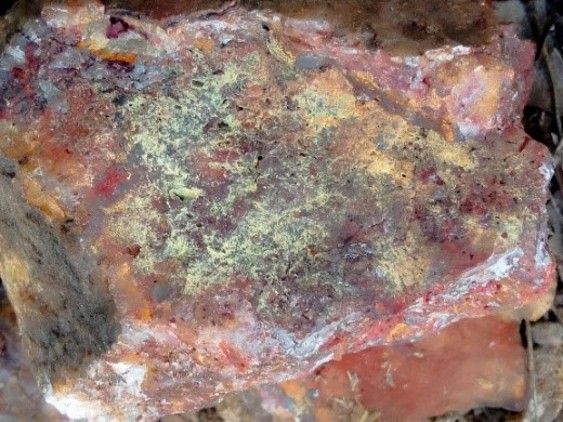
Figure 2: Detail of oxidized quartz-vein material with hematite, yellow alteration and boxwork-like textures at prospect MJ-144
SYSTEMATIC SOIL AND MULTI-MEDIA SAMPLING
A systematic soil-sampling grid has been established across the known metagranodiorite occurrences and their immediate surroundings. Sampling lines are spaced approximately 100 metres apart, with sample stations at 25-metre intervals (Figure 3).
The soil program is intended to assist in evaluating the lateral extent of the mineralized host rocks and identifying geochemical responses in areas where bedrock exposure is limited. The results will be integrated with detailed geological and structural mapping, rock geochemistry and active stream sediment data to refine the geological model and establish priorities for subsequent exploration.
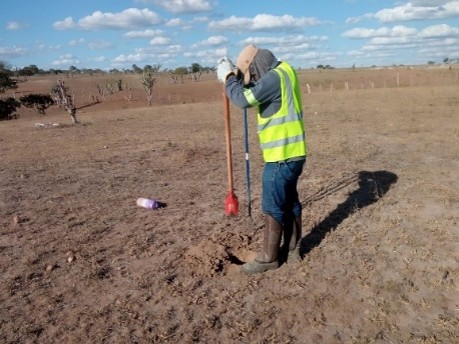
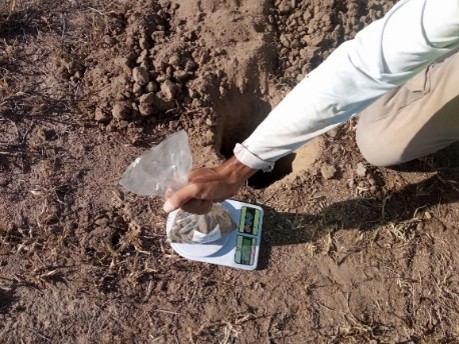
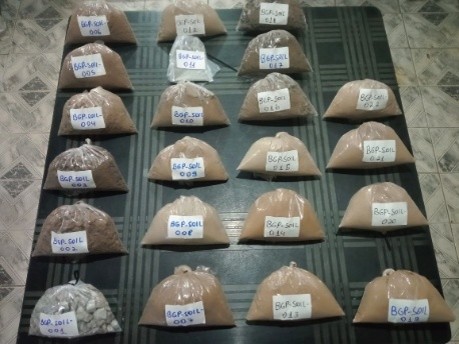
Figure 3: Brasnova field personnel conducting systematic soil sampling across the Capela Target.
The analytical program comprises multiple batches of rock, active stream sediment and soil samples. The follow-up rock samples include material collected from within the interpreted mineralized corridor and from hydrothermally altered quartz-vein occurrences outside the original target area (Figure 4).
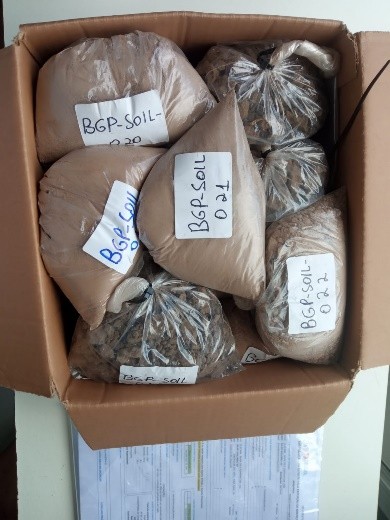
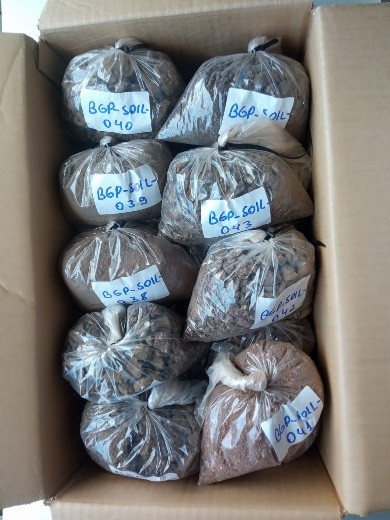
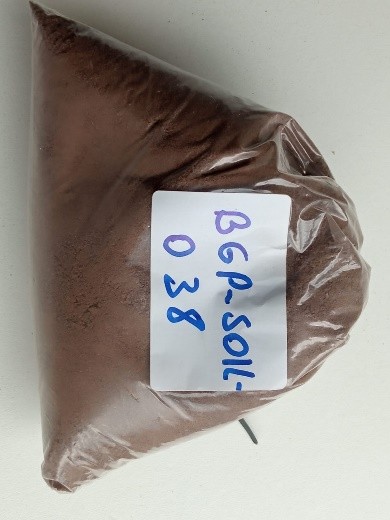
Figure 4: Rock and soil samples prepared for submission to SGS Geosol as part of the expanded Capela exploration program.
SAMPLE PREPARATION, ANALYSIS AND QA/QC
Samples are submitted to SGS Geosol for preparation and geochemical analysis. Gold analysis is completed using Fire Assay with 50g sample charge with an AAS finish, while multi-element analysis is performed by ICP-OES/MS following multi-acid digestion.
In addition to the laboratory’s internal quality assurance and quality control procedures, Brasnova’s sampling batches include certified reference materials and blank samples. Analytical results from the ongoing program will be reported after they have been received, compiled and verified through the Company’s internal QA/QC procedures.
GEOLOGICAL CONTEXT AND MINERALIZATION
The Capela Project is situated within a complex structural and geological environment marked by regional folding and multiple shear zones. Ongoing geological work indicates that the Capela Target occurs near the transition between granodioritic and granitic intrusions and metavolcanic–metasedimentary rocks. Hydrothermal alteration has been mapped throughout this broader intrusive and structural setting, providing an important geological framework for continued exploration and target development (Figure 5).
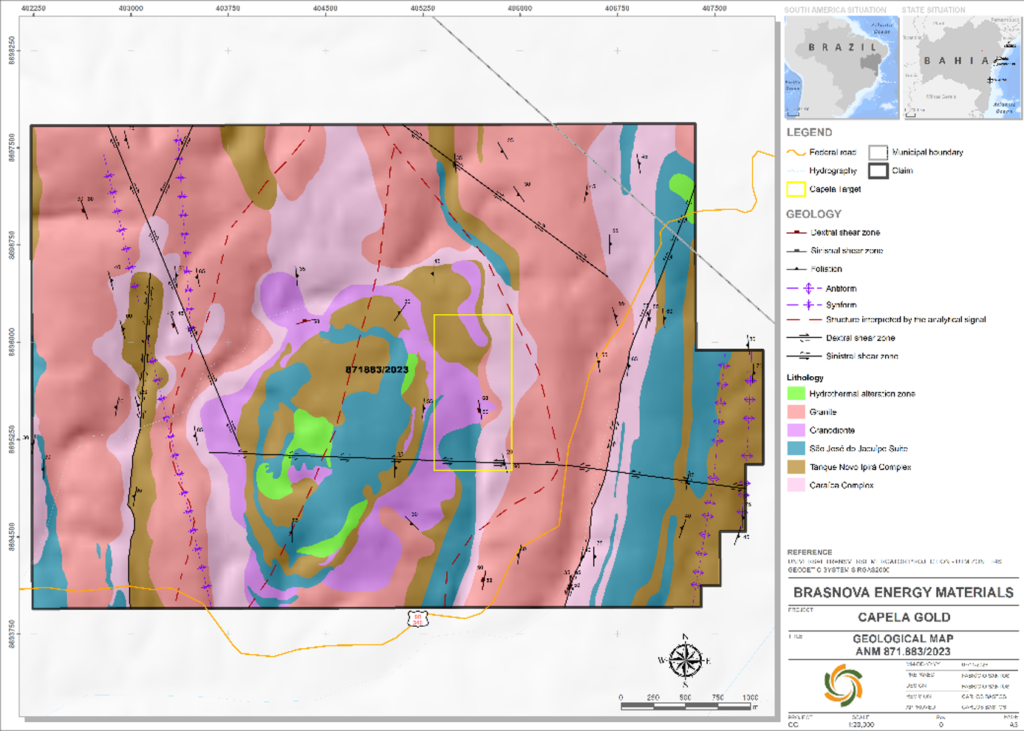
Figure 5: Geological map of the Capela Gold Project illustrating the location of the Capela Target within claim ANM 871.883/2023 and the principal geological units and structural features.
ANALYTICAL RESULTS AND GEOLOGICAL INTERPRETATION
Previously reported analytical results from the initial rock chip sampling program confirmed the presence of gold mineralization within the metagranodioritic host rocks at the Capela Target. Gold values from 22 mineralized samples ranged from 0.241 g/t Au to 4.13 g/t Au, with four samples returning values greater than 1.0 g/t Au:
- BGP-ROCK-002 at 4.13 g/t Au.
- BGP-ROCK-006 at 1.734 g/t Au.
- BGP-ROCK-014 at 1.435 g/t Au.
- BGP-ROCK-022 at 1.170 g/t Au.
The gold results show a spatial and geological association with intensely altered and oxidized metagranodioritic rocks displaying potassic alteration, silicification, stockwork-style quartz veinlets and disseminated sulphides. These characteristics support the interpretation of a structurally controlled hydrothermal mineralizing system.
Multi-element analytical data also identified variable enrichment in copper, lead, zinc, sulphur, arsenic and silver. The relationship between gold and these elements is consistent with the circulation of mineralizing hydrothermal fluids and the development of sulphide-bearing zones along fractures, shear structures and other favourable pathways within the intrusive rocks.
Figure 6 illustrates the relationship between gold values and selected elements associated with the sulphide-bearing hydrothermal system. The integrated interpretation of these results is being used to guide the current geological mapping, soil sampling and follow-up rock sampling programs.
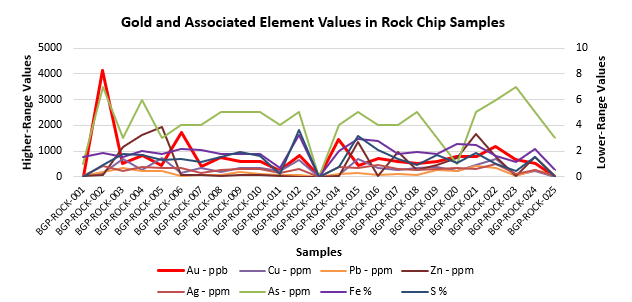
Figure 6: Relationship between previously reported gold values and selected elements associated with sulphide mineralization in rock chip samples from the Capela Target.
The complete analytical results from the initial rock chip sampling program are presented in Appendix A.
QUALIFIED PERSON COMMENTARY
Mr. Carlos Henrique Lourenço Bastos, Qualified Person for the Capela Gold Project, commented:
“The continued mapping and systematic expansion of the sampling program represent an important progression from the initial confirmation of surface gold mineralization toward defining the broader geological system at Capela.“
“The combination of structurally prepared metagranodioritic host rocks, potassic alteration, silicification, stockwork quartz veining, sulphidation and gossan development provides a clear technical basis for continued exploration. The additional boxwork-textured quartz-vein occurrences identified beyond the original target expand the area requiring follow-up, while the soil grid is designed to test the continuity of the system in areas with limited exposure.“
“These new field observations are encouraging, although their significance will be determined by the pending laboratory results and their integration with the geological and structural data.”
ABOUT THE CAPELA GOLD PROJECT
The Capela Gold Project is an early-stage gold exploration asset associated with a dome-shaped intrusive granodioritic system (Figure 7), structurally controlled by NW-SE and NE-SW corridors. Previous geological mapping identified hydrothermal alteration, sulphide-bearing outcrops, gossan zones and quartz-sulphide veinlets, features commonly associated with intrusion-related gold systems.
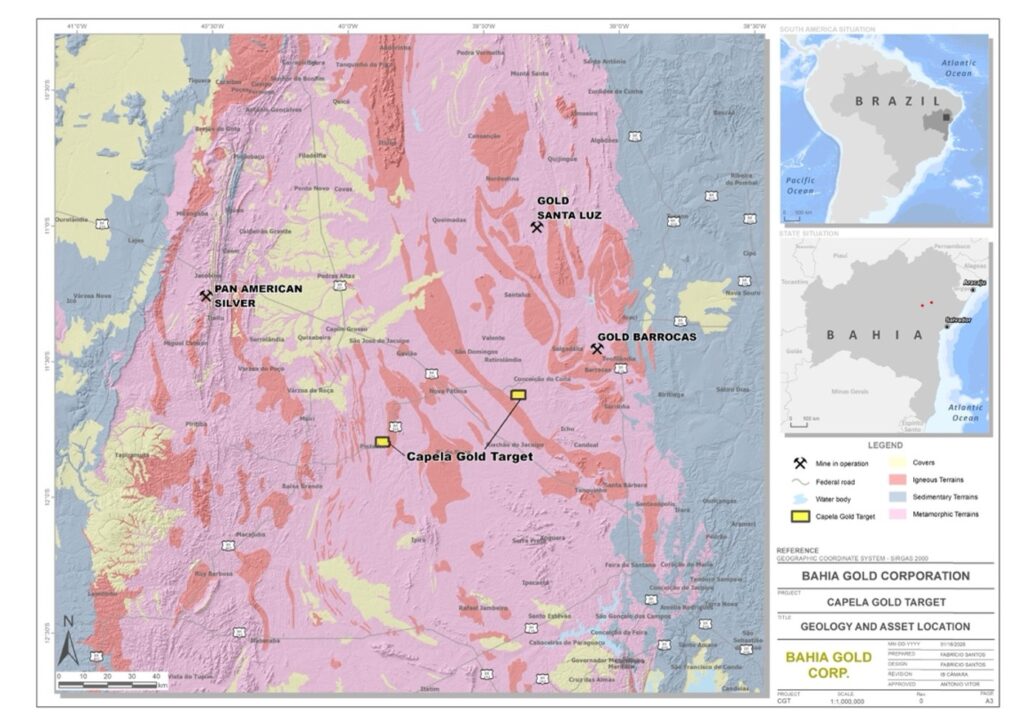
Figure 7: Capela Gold Project in proximity to Jacobina Gold Complex (Pan American Silver) and Santa Luz Bahia Complex.
The project is currently undergoing technical advancement under the NI 43-101 framework, with ongoing activities supervised as part of the Company’s exploration and validation strategy.
QUALIFIED PERSON
Mr. Carlos Henrique Lourenço Bastos is a Senior Geologist, M.Sc., and a Qualified Person registered with the Brazilian Commission for Resources and Reserves (CBRR). He is a Fellow of the Australasian Institute of Mining and Metallurgy (FAusIMM) and a member of the Society for Mining, Metallurgy & Exploration (SME).
Mr. Bastos has over 30 years of experience in mineral exploration and mining projects in Brazil and abroad, including resource estimation, QA/QC implementation, mine planning and supervision of drilling and exploration programs.
ABOUT BRASNOVA ENERGY MATERIALS INC.
Brasnova Energy Materials is focused on securing, developing and monetizing Brazilian critical materials assets and related materials technologies, to build shareholder value.
On behalf of the Board of Directors of
BRASNOVA ENERGY MATERIALS INC.
Joel Rovaris Ferari CEO -Brasnova
info@brasnovaem.com
FOR THE ADEQUACY OR ACCURACY OF THIS RELEASE
The information contained herein contains “forward-looking statements” within the meaning of applicable securities legislation. Forward-looking statements relate to information that is based on assumptions of management, forecasts of future results, and estimates of amounts not yet determinable. Any statements that express predictions, expectations, beliefs, plans, projections, objectives, assumptions or future events or performance are not statements of historical fact and may be “forward-looking statements”.
Neither the TSX Venture Exchange nor its Regulation Services Provider (as that term is defined in policies of the TSX Venture Exchange) accepts responsibility for the adequacy or accuracy of this release.
APPENDIX A – PREVIOUSLY REPORTED ANALYTICAL RESULTS
Table 1: Previously reported analytical results from rock chip samples collected at the Capela Target. Results were originally disclosed by the Company on July 14, 2026.
| SAMPLE | TYPE | Au – ppb | Ag – ppm | As – ppm | Cu – ppm | Pb – ppm | S % | Zn – ppm |
| BGP-ROCK-001 | Blank | <5 | 0.1 | 1.0 | 11.8 | 22.3 | <0.01 | 38.0 |
| BGP-ROCK-002 | Chip Sample | 4,130 | 0.8 | 7.0 | 150.5 | 188.9 | 0.9 | 51.0 |
| BGP-ROCK-003 | Chip Sample | 527 | 0.4 | 3.0 | 675.5 | 336.5 | 1.7 | 1,162 |
| BGP-ROCK-004 | Chip Sample | 835 | 0.8 | 6.0 | 277.2 | 239.8 | 1.7 | 1,633 |
| BGP-ROCK-005 | Chip Sample | 441 | 0.7 | 3.0 | 729.4 | 237.8 | 1.3 | 1,921 |
| BGP-ROCK-006 | Chip Sample | 1,734 | 0.7 | 4.0 | 151.4 | 44.1 | 1.4 | 59.0 |
| BGP-ROCK-007 | Chip Sample | 412 | 0.3 | 4.0 | 347.2 | 72.2 | 1.1 | 69.0 |
| BGP-ROCK-008 | Chip Sample | 737 | 0.5 | 5.0 | 187.2 | 71.9 | 1.5 | 11.0 |
| BGP-ROCK-009 | Chip Sample | 592 | 0.6 | 5.0 | 341.1 | 180.0 | 1.9 | 55.0 |
| BGP-ROCK-010 | Chip Sample | 582 | 0.6 | 5.0 | 354.6 | 93.4 | 1.6 | 51.0 |
| BGP-ROCK-011 | Chip Sample | 241 | 0.3 | 4.0 | 220.3 | 51.3 | 0.2 | 13.0 |
| BGP-ROCK-012 | Chip Sample | 836 | 0.6 | 5.0 | 653.5 | 73.0 | 3.7 | 6.0 |
| BGP-ROCK-013 | Standard | <5 | N.A. | N.A. | N.A. | N.A. | N.A. | N.A. |
| BGP-ROCK-014 | Chip Sample | 1,435 | 0.7 | 4.0 | 72.3 | 93.9 | 0.7 | 42.0 |
| BGP-ROCK-015 | Chip Sample | 441 | 0.7 | 5.0 | 707.6 | 136.3 | 3.1 | 1,343 |
| BGP-ROCK-016 | Chip Sample | 694 | 0.9 | 4.0 | 345.3 | 54.9 | 2.1 | 10.0 |
| BGP-ROCK-017 | Chip Sample | 578 | 0.6 | 4.0 | 255 | 90.2 | 1.4 | 954 |
| BGP-ROCK-018 | Chip Sample | 522 | 0.6 | 5.0 | 322.7 | 81.6 | 0.9 | 263 |
| BGP-ROCK-019 | Chip Sample | 601 | 0.6 | 3.0 | 378.3 | 271.2 | 1.7 | 453 |
| BGP-ROCK-020 | Chip Sample | 768 | 0.6 | <1 | 233.3 | 206.3 | 1.0 | 742 |
| BGP-ROCK-021 | Chip Sample | 771 | 0.6 | 5.0 | 449.4 | 418.7 | 1.9 | 1,656 |
| BGP-ROCK-022 | Chip Sample | 1,170 | 1.0 | 6.0 | 688.8 | 357.5 | 1.0 | 772 |
| BGP-ROCK-023 | Chip Sample | 671 | 0.2 | 7.0 | 80.2 | 46.4 | 0.4 | 25.0 |
| BGP-ROCK-024 | Chip Sample | 509 | 0.5 | 5.0 | 235.0 | 275.3 | 1.6 | 776 |
| BGP-ROCK-025 | Chip Sample | <5 | <0.02 | 3.0 | 3.4 | 15.0 | <0.01 | 10.0 |